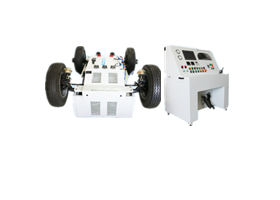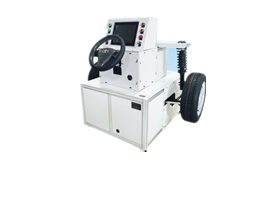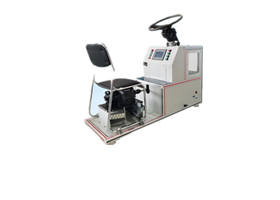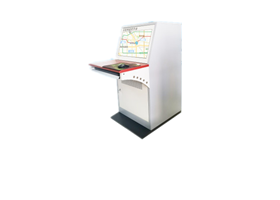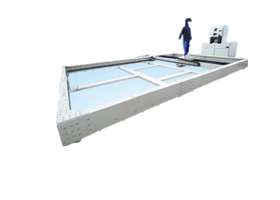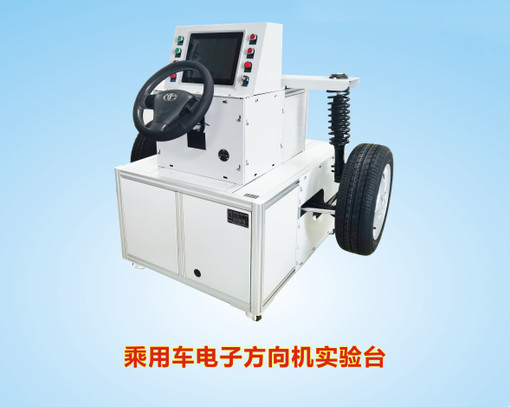
The vehicle control technology for intelligent driving vehicles is based on environmental perception technology. It plans the target trajectory according to decision-making, and enables the vehicle to travel accurately and stably by following the target trajectory through the cooperation of longitudinal and lateral control systems. At the same time, it allows the vehicle to perform basic operations such as speed adjustment, distance maintenance, lane changing, and overtaking during driving. Vehicle lateral control refers to control perpendicular to the direction of motion, which in the case of a car means steering control. The goal is to control the vehicle to automatically maintain the desired driving route and achieve good ride comfort and stability under different vehicle speeds, loads, wind resistance, and road conditions. The electronic steering system for passenger cars utilizes servo motors in conjunction with mature control algorithms to achieve active steering of the vehicle, which is an essential control execution unit for intelligent driving.
Main functions:
1. Tracking the body deviation of the steering wheel 2. Simulating steering 3. Automatic direction fine-tuning